








indice di questo articolo...
- Is Paris a safe city? Safety and petty crime in Paris
- Common incidents: petty crime in Paris explained
- Fake petitions and signature scams in Paris (*)
- ATM scams and cash machine theft in Paris
- Pickpockets in the Paris metro and public transport
- Pickpockets in cafés, restaurants and tourist terraces
- Camera and smartphone theft during photos (*)
- Fake found ring scam in Paris (*)
- Fake helpers and tourist assistance scams
- Fake directions scams in tourist areas
- Fake ticket inspectors on public transport...
- Fake surveys on public transport... (*)
- Alleged extortion by RATP control staff...
- Fake cashiers in restaurants and street cafés...
- Metro fare evasion (“jumping the turnstile”) (*)...
- The three-card trick (*)...
- Donation containers placed in the middle of sidewalks...
- Fake fights...
- The begging chant...
- Car theft in Paris...
- Non-bank ATMs with high fees...
- Hidden tips or donations on POS terminals...
- fake taxi drivers (*)...
- bracelet sellers and portrait artists in Sacré-Cœur / Montmartre...
- cost per person for tourist rickshaw / pedicab tours...
- in hotels (*)...
- water in restaurants...
Is Paris a safe city? Safety and petty crime in Paris
It’s not an easy question to answer.
I won’t go into international terrorism, but I’ll focus on what most visitors actually experience: petty crime in Paris, meaning the small incidents that can occasionally happen during a normal, relaxed trip as a tourist in the city.
Overall, Paris does not present any particular dangers compared to other large European cities, including the major Italian cities most travellers are already familiar with. In fact, you may sometimes feel that in Paris certain situations look a bit “outdated”, almost as if time had stopped compared to what we are used to in more recent years.
When incidents do occur, they are often not violent in nature. In many cases, the people involved are very young individuals, sometimes almost children, usually operating in small coordinated groups.

 In Paris you will notice a strong police presence throughout the city. Unlike in many other places, you will frequently see uniformed officers patrolling on foot across central streets and tourist areas.
There are also numerous plainclothes police units, operating in cars or on motorbikes. When they intervene, one officer often wears an orange armband with the word POLICE (*) clearly visible.
In addition, the city is equipped with more than 5000 surveillance cameras, all connected in real time to central control rooms, contributing to overall urban monitoring.
Common incidents: petty crime in Paris explained
Below are some typical examples of incidents that may occur in tourist areas, ranging from scams to pickpocketing or distraction techniques.
Note: (*) marks cases I personally witnessed during my travels.

Fake petitions and signature scams in Paris (*)
One of the most common scams involves a small group of young girls surrounding tourists with a clipboard or sheet of paper presenting a fake petition or signature request.
They can be quite persistent and distracting. While you are focused on the paper, a second person may attempt to steal your wallet or smartphone from behind. They often use jackets, folders or cardboard panels to hide their hands.
In less aggressive versions, they may ask for a small donation for a supposed association, often “for the deaf and mute”.
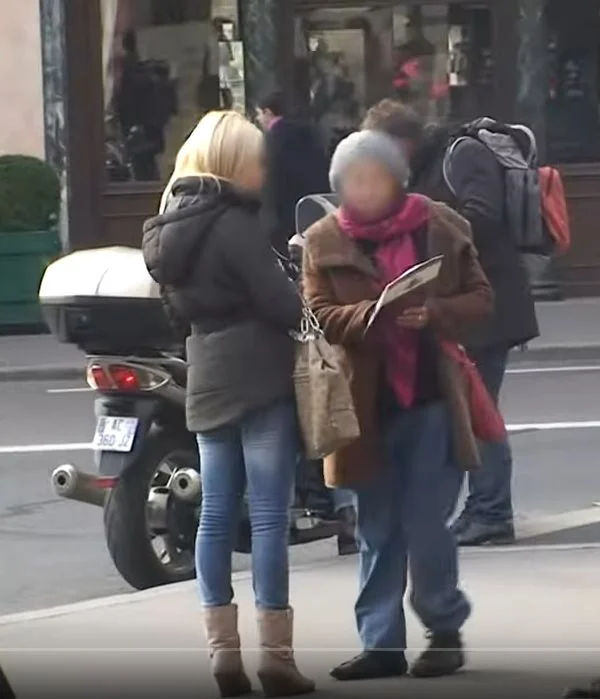


They usually target tourist groups — especially Asian, Spanish and Italian visitors — and operate in highly crowded tourist areas such as Notre Dame, the Eiffel Tower, Trocadéro, Galeries Lafayette, the Opera area, the Tuileries gardens, and bus drop-off points.
ATM scams and cash machine theft in Paris
It is strongly recommended not to withdraw cash from street ATMs (DAB machines).
A typical scam occurs when, at the exact moment the machine is dispensing cash, someone distracts you while an accomplice quickly grabs the money from your hands. This can also happen inside bank branches that may appear more secure.
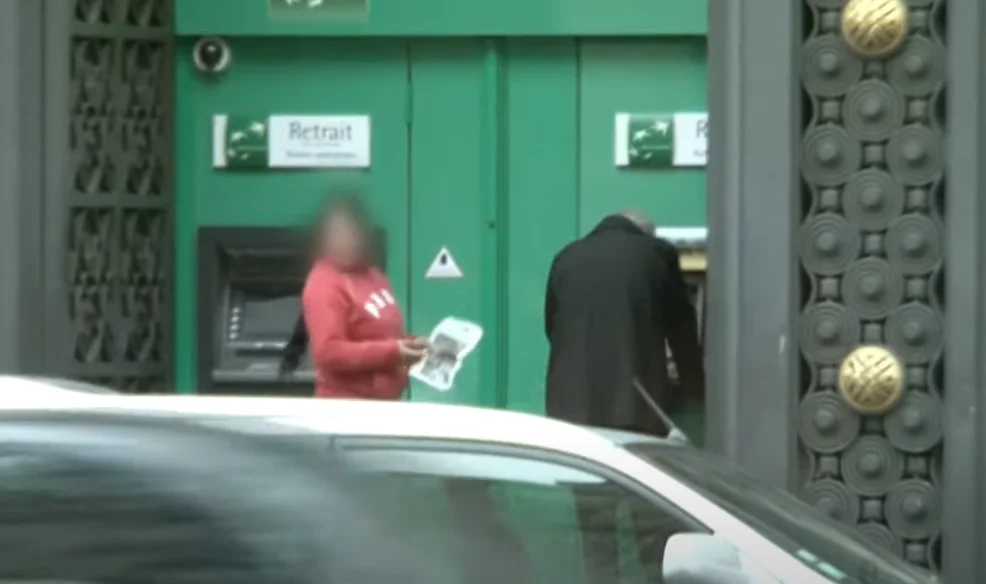
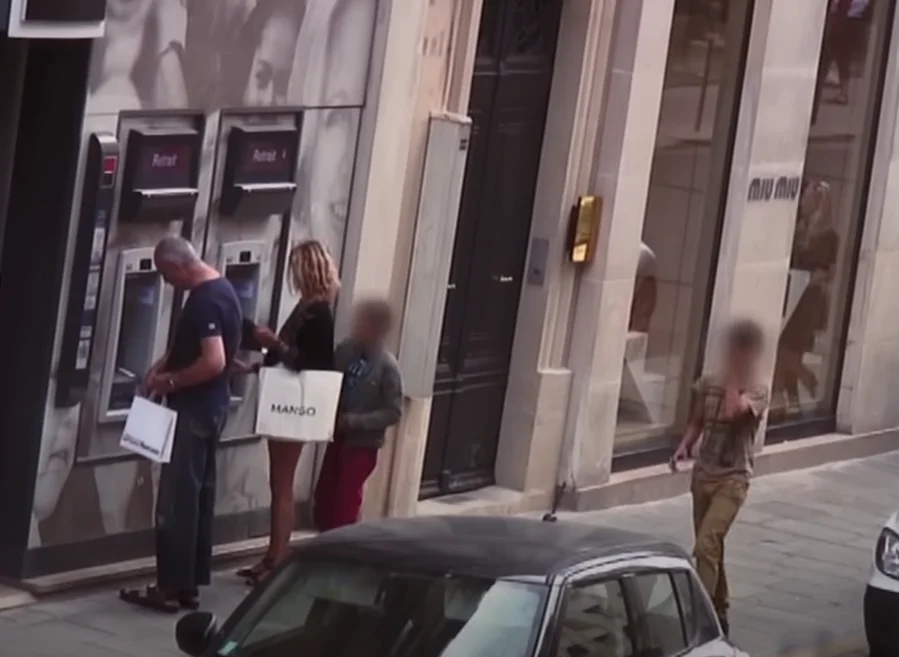
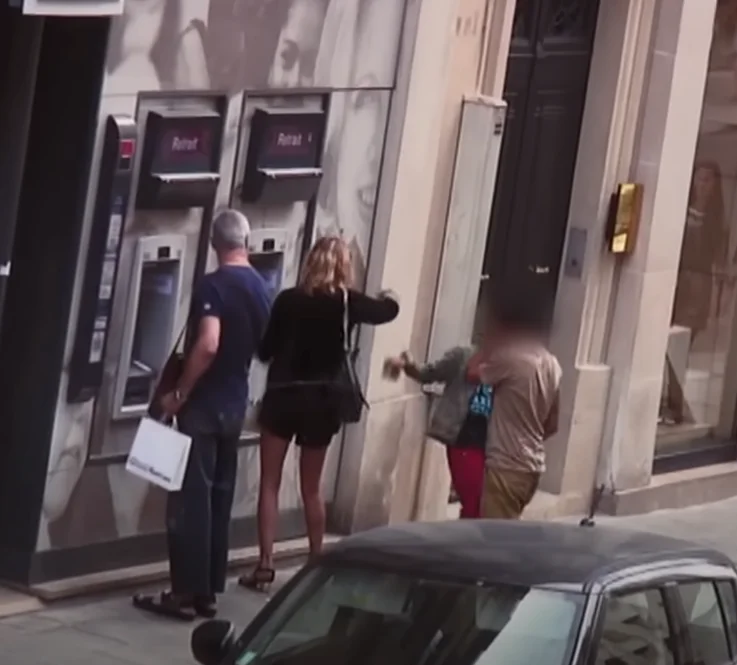
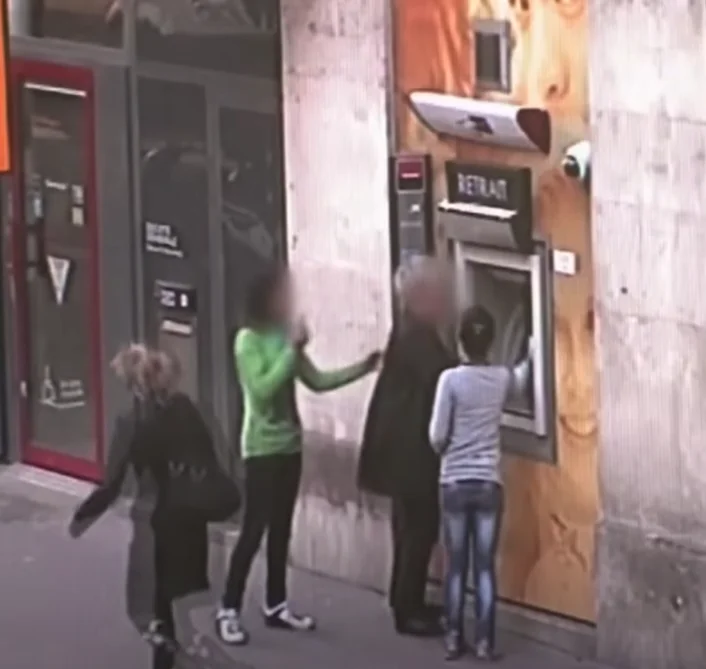
For safety reasons, avoid ATMs located in busy tourist streets or near large department stores. Prefer indoor machines inside banks, in quiet streets, and avoid withdrawing cash alone when possible.
In Paris, ATMs are widely available — often even inside hotels and museums — but most payments are made by contactless card, even for small amounts, reducing the need for cash overall.
Pickpockets in the Paris metro and public transport
Public transport in Paris is generally safe, but crowded environments such as the metro, buses and trams require attention.
It is advisable not to use your smartphone excessively in crowded areas, especially near doors. Theft can occur in the exact moment doors are closing.
Inside trains, avoid standing directly in front of the doors, as this is a common area used by pickpockets for quick escape.
If a train is crowded, try moving to the first or last carriages, which are often slightly less busy.
On escalators, be aware of situations where someone stops suddenly in front of you while another person takes advantage of the blockage behind you to steal belongings.
In crowded tourist locations such as the Eiffel Tower, museums, department stores and the Champs-Élysées, maintain awareness even in seemingly “safe” environments.
Pickpockets in cafés, restaurants and tourist terraces
Never leave phones, wallets or tablets unattended on café tables, especially in outdoor seating areas.
A common tactic involves someone placing a sheet of paper or map over your phone under the pretext of asking for directions, then quickly stealing it.


Camera and smartphone theft during photos (*)
This can happen when taking photos in front of landmarks such as Notre Dame, the Louvre or along the Seine.
Two people may ask you to take their picture and then offer to return the favour. While you are posing, your camera or smartphone may be taken during the distraction.
In these situations, it is best to avoid handing over your device. Simply take photos for others and politely decline.
Fake found ring scam in Paris (*)
A person may pretend to pick something up from the ground and claim to have found a valuable ring.
They may say they cannot keep it due to religious reasons or lack of time, and offer to sell it at a low price. The ring is always worthless.
The best approach is simply to ignore and walk away.
Fake helpers and tourist assistance scams
At metro ticket machines or Navigo pass top-up points, individuals may pose as helpers offering assistance.
While appearing helpful, they may try to manipulate your card or replace it during the process.
As a general rule, in Paris unsolicited help should always be treated with caution. The safest option is to complete the operation yourself, as instructions are usually available in multiple languages.
Fake directions scams in tourist areas
Someone may stop you in the street asking for directions, often in English and with a map in hand.
While you are distracted, an accomplice may attempt to open your bag or steal valuables.
If unsure, it is better to keep walking or respond briefly without stopping.
If you meet fellow travellers, a quick recommendation is to rely on official travel guides or trusted local resources.
Fake ticket inspectors on public transport...
It’s possible to encounter them after the exit gates or in the corridors of metro stations.
The real RATP inspectors always work in groups of two or three (or more), wearing identical uniforms with the RATP logo, and they carry a reader device or smartphone used to check the validity of Navigo passes or tickets with microchips.
The fake inspectors may have bought uniforms and accessories online, for example on Vinted, and use them to impersonate officials and attempt scams.
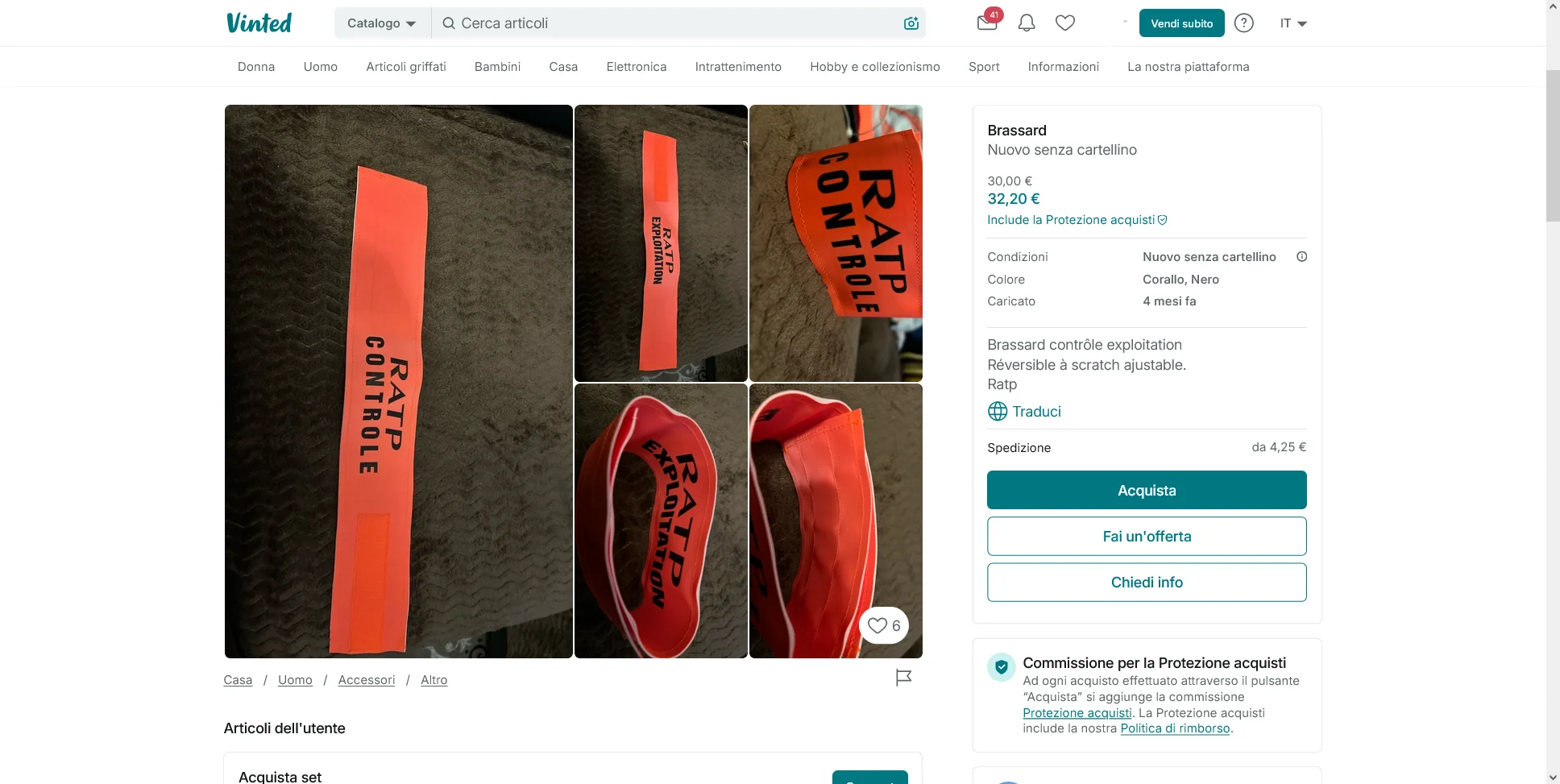 If they are not real inspectors, the risk is having your Navigo Easy or Découverte card stolen.
If in doubt, before showing your ticket, take a moment, act as if you don’t understand, and try to ask passers-by for help.

Fake surveys on public transport... (*)
You might encounter, on buses or trams, someone approaching you with an ID badge and a smartphone asking if you want to take part in a transport survey.
They usually speak in French, but sometimes also in English.
You are asked a series of questions that sound plausible: how long you are staying in Paris, what type of ticket you have purchased, whether you have a pass, etc.
If you look at their smartphone, you may see what appears to be a well-made app or website with RATP logos, etc.
Everything seems harmless until they ask you to validate your answers by registering your Navigo pass via NFC.
The concern is that they may store your pass on their smartphone and potentially reuse or resell it later.
In theory, there is no immediate consequence for you and your pass should remain active, but from that moment on they could potentially use your pass for transport.
If you wish, you can take part in the “survey”, but do not show your card. Simply pretend not to understand and politely refuse. If they are genuine survey staff, they will simply walk away with a greeting.
Alleged extortion by RATP control staff...
I have recently read about some disturbing incidents.
It seems that near metro exits, some RATP inspectors (apparently real ones) stop tourists, often in groups of 2–4 people, to check paper tickets.
During the “inspection”, some tickets allegedly disappear, leading to a fine being issued (around €60), payable on the spot, sometimes by card.
A receipt is also issued, which makes them appear to be legitimate inspectors.
What is concerning is the possibility that some individuals may be falsely accused of not having a valid ticket, perhaps because inspectors are under pressure to issue a certain number of fines per month, focusing on more vulnerable users such as foreign tourists.
If this happens and you believe you are in the right, do not hesitate to stand your ground (even if you do not speak the language) and, if necessary, try to walk away (RATP staff cannot physically detain you), or pretend to call the police at 112.
Fake cashiers in restaurants and street cafés...
This is a rarer situation, but not impossible. See this video.
It usually happens at outdoor restaurant tables on sidewalks or terraces, typically those furthest from the entrance.
After ordering, before or after receiving your food, someone dressed as a waiter may approach with a wireless POS terminal asking you to pay for your order, sometimes using a convincing excuse or an authoritative tone.
In reality, they may not be real staff but individuals waiting nearby for the right moment.
This can happen during peak hours, especially in venues spread along multiple sides of a street corner or in chain cafés.
The risk is paying the wrong person and having to pay again later. The best approach is always to take your time, ask to see the receipt first, and remember clearly the face of the waiter who took your order.
Metro fare evasion (“jumping the turnstile”) (*)...
I have explained how metro and RER gates work.
It may happen that immediately after you validate your Navigo Easy or Découverte card, someone approaches from behind to take advantage of the gate opening and slip through with you.
These are usually teenagers, often seen near turnstiles in stations such as the northern part of line 4, Anvers (near Montmartre), Châtelet–Les Halles, Gare du Nord, and Gare de l’Est.
You don’t lose anything, they simply ride without paying.
To avoid this, if you are in a group, enter in a line using the same gate, letting the last person close the passage.
The three-card trick (*)...
Incredibly, it still exists in Paris.
One person moves cards or cups with a ball, while one or two accomplices pretend to play (and win), encouraging passers-by to join in.
There are usually 4 or 5 additional individuals watching from a distance, who may prevent people from filming or intervene if trouble arises.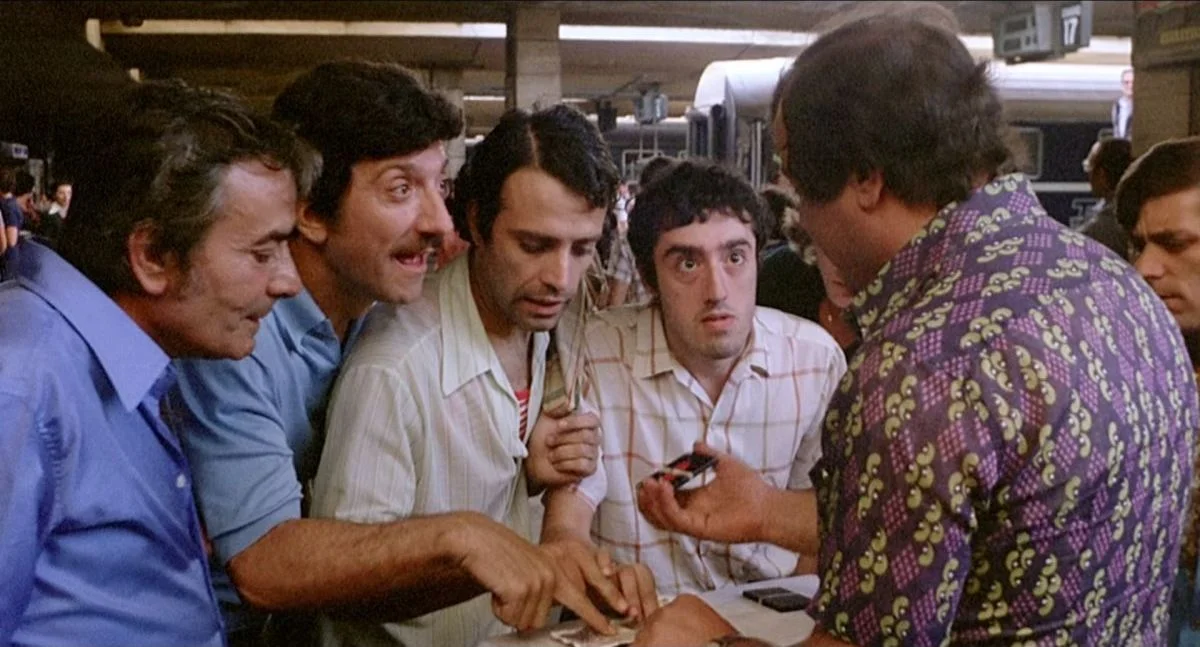
They are often found in busy areas under the Eiffel Tower, on the street from Anvers metro up to Sacré-Cœur, or on pedestrian bridges over the Seine.
Donation containers placed in the middle of sidewalks...
On busy sidewalks in tourist areas, you might accidentally bump into a transparent cup or donation container placed strategically in the middle by a homeless person.
If it happens, you may instinctively start picking up the coins, but at that moment the person may approach claiming a much higher amount than what was actually collected.
You decide how to react—ignore the situation or leave a small extra donation.
In more dangerous cases, someone may take advantage of the distraction to steal your wallet, bag, or smartphone.
Fake fights...
Be careful with groups of people gathering around apparent fights between street vendors, usually near monuments (Sacré-Cœur, Trocadéro) or flea markets such as Saint-Ouen/Clignancourt.
Sometimes these fights are staged. While people stop to watch, they may not notice pickpockets operating from behind.
The begging chant...
This often happens on the metro, usually during off-peak hours with less crowded carriages.
At a random stop, a person enters and stands in the center of the carriage, starting a monotonous plea asking for money to buy food or help.
They then walk through the carriage with an outstretched hand collecting small donations.
It can also happen on the street, where the person unexpectedly blocks your path.
A simple hand gesture is enough to politely refuse.
Car theft in Paris...
Although I do not have statistical data, car theft exists in Paris, mainly targeting higher-end vehicles, both on the street and in public parking areas.
It is advisable to choose a hotel with private parking or garage and possibly use additional mechanical anti-theft devices such as steering wheel locks.
It is also useful to bring two sets of keys, kept separately, in case one is lost or stolen.
Here are some additional examples of common potential scams (arnaques):
Non-bank ATMs with high fees...
So-called “ATMs” are spreading—cash machines not operated by banks but by private companies charging very high fees per withdrawal, different from your bank agreement.
They are usually found inside or next to ethnic shops, busy streets, hotel lobbies, or museums. They are included among scams because, although legitimate and functional, fees are often not displayed transparently.
It is recommended to use clearly identifiable bank ATMs instead.
Hidden tips or donations on POS terminals...
When paying by card, pay attention to the POS screen.
In restaurants, a modern POS with a colour display may show a seemingly harmless survey asking you to rate your experience with smiley icons.
However, in smaller text, selecting certain options may automatically add a 10% or 20% tip to your bill.
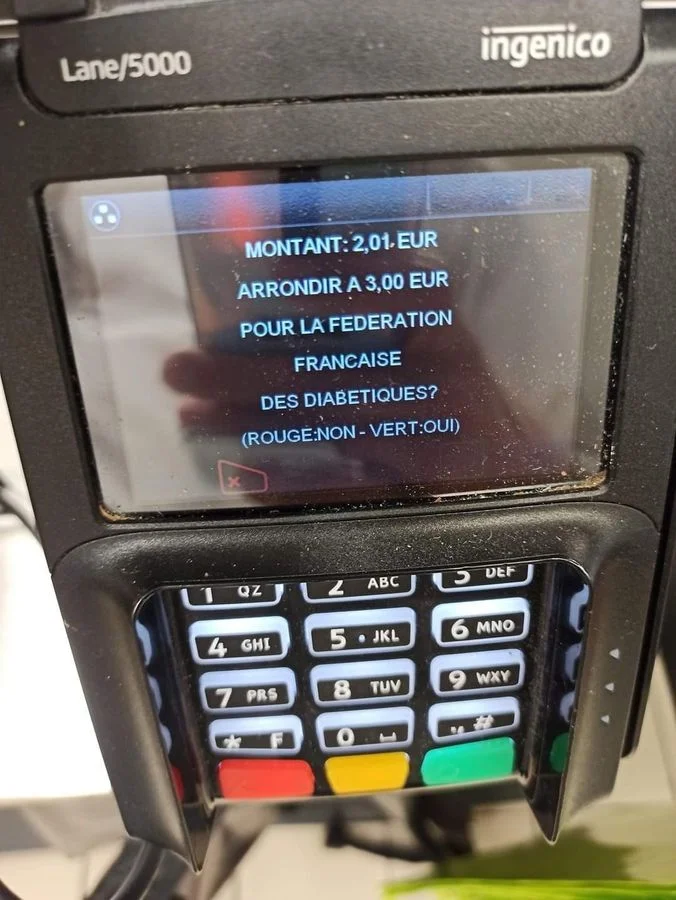
A similar trick may occur in shops, where you are asked to round up the total for charity.
Pressing the green button too quickly may authorize the donation, while the red button cancels it.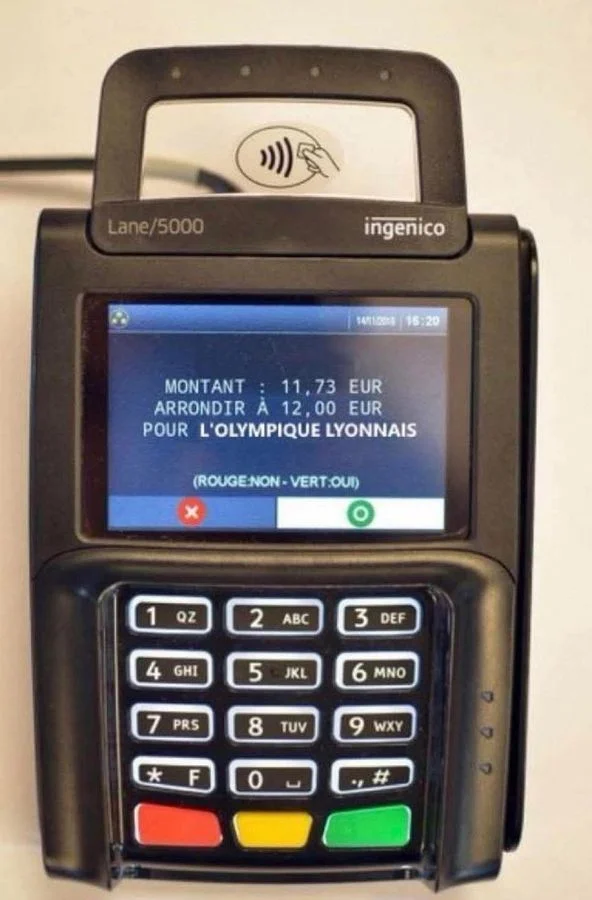
fake taxi drivers (*)...
As in any city, they exist here as well.
They may approach you near airports, train stations, or when they see you with luggage and a typical tourist look. You can also find them at night outside clubs, discos, etc. They may offer you a ride at a fixed price depending on your destination, which in some cases might even be cheaper than the meter.
I’m not making any ethical judgment here, just describing the practical side. Often they are “unlicensed” in the sense that they don’t hold any official permit, but they still take you to your destination because that’s the way they’ve arranged to work.
You might consider using them if you have a good level of French and if you are able to make it clear that you won’t accept any possible extra charges for luggage, night service, holidays, etc. It’s even better if you already know the city a bit and can recognize any detours. If you have a smartphone, you can show that you are checking the route via GPS from time to time.
Avoid them if you are carrying luggage, to reduce the risk of theft from the trunk (possibly coordinated with an accomplice), and of course never take them alone.
In reality, in Paris services like Uber and Bolt are very common, and through the app you can know in advance the exact cost of your trip, with payment handled directly in-app. There is also more attention to service quality and stronger customer support.
Finally, note that official taxis from Orly Airport have a fixed fare to Paris (about 40 minutes), which varies only depending on which side of the Seine you are going to: €45 for the Right Bank and €36 for the Left Bank.
bracelet sellers and portrait artists in Sacré-Cœur / Montmartre...
A classic. You will almost always find them, at any time of day, in front of the Sacré-Cœur basilica, at the top of the steps, and along the street leading to Place du Tertre.
They are groups of young men who can even be quite friendly and will often speak to you in Italian, trying to stop you and quickly tie a colorful bracelet around your wrist.
They usually target couples or groups of girls.
If they succeed, they stick to you like glue, continuing to tie it while saying it’s a free gift for kind tourists, etc... but that you can leave a 5€ tip... because usually they ask others for 10€... and so on.
As soon as you see them, just keep walking, hands in pockets, and politely ignore them with a smile.
In the same area you’ll also find portrait artists...
They usually approach couples and offer to make a portrait or caricature. At the slightest sign of interest they start drawing, and may even follow you into the church.
You can also find them in other tourist areas such as in front of the Pompidou Centre, the Louvre, the Orsay Museum, the Eiffel Tower and Trocadéro, the Latin Quarter, etc.
Same advice: just walk past and look away.
If you really want a nice portrait, go to the artists seated at Place du Tertre, where some are genuinely very skilled. Always agree the final price in advance (usually around €50), ideally having them write it down on a piece of paper you keep in hand during the session.
cost per person for tourist rickshaw / pedicab tours...
In the most touristy areas you may see various tricycles, pedicabs, tuk-tuks and similar vehicles offering sightseeing tours of the city or its main attractions.
If you are interested, always ask for clarification about the route and the monuments included, but above all confirm the final total price of the tour.
It may happen that at the end of the ride they claim the price shown refers to per person instead of per ride, effectively trying to charge double.
The recommendation is to agree everything clearly before departure, ideally by having the total price written down before starting. At this stage, drivers usually speak French, English, and often try some Italian as well.
in hotels (*)...
Remember that in France, accommodation does not usually include breakfast, which is charged separately and can sometimes be surprisingly expensive.
However, if you booked a rate that includes breakfast, make sure it is not added as a supplement at check-in or check-out.
Before paying, always check the invoice and, if needed, show your booking confirmation with the agreed price and inclusions. That usually resolves any issue immediately. In these situations they will try hard to explain themselves in French, English, or sometimes Italian, because they understand that until the issue is clarified, you will not pay.
Also don’t be surprised if you are asked to pay the full stay upon arrival; this is standard practice in France.
water in restaurants...
If it’s not a scam, it’s close...
As mentioned in eating in Paris, even when you choose a fixed menu including dessert, the price is generally reasonable.
However, drinks (boissons) are always extra.
 A beer, a soda, or juice might cost around €5–6 or more... but even a simple bottle of water (75cl) can cost the same or more!
Instead, ask for une carafe d’eau: you will be served a free jug of tap water, which is perfectly fine in France.
A beer, a soda, or juice might cost around €5–6 or more... but even a simple bottle of water (75cl) can cost the same or more!
Instead, ask for une carafe d’eau: you will be served a free jug of tap water, which is perfectly fine in France.
This simple trick also signals that you are an attentive traveler, which may help you avoid other unnecessary charges.
Finally, some general advice...
- Avoid keeping your wallet in your back pocket, and don’t even use a bum bag displayed proudly as if to say “I’m a tourist and I keep everything here”.
- Distribute cash among travel companions and carry only small amounts, as you can use cards for most expenses, even small ones like cafés or museum tickets.
- Pickpockets are generally the same types you would find in any large European city, often groups of teenagers or very young kids.
- If you use your smartphone a lot for photos or videos, always be careful while using it. Make a daily backup of your photos (Google Drive, Amazon Photos, etc.).
- Enjoy nightlife, but after metro closing time it is often more convenient to return by taxi / Uber / Bolt.
- Avoid arguments with groups of young people, especially if they seem intoxicated. Sometimes collisions in the street are just a pretext.
- Be aware that different districts of Paris can vary significantly in atmosphere.
From your side, behave responsibly:
no shouting in the streets, don’t walk on lawns (pelouse) where prohibited, and respect local rules. Don’t steal souvenirs or hotel key cards.
At pedestrian traffic lights, wait for green even if no cars are coming.
Be patient in queues — you will see them everywhere, in museums, bakeries, cafés, shops, and more.
Most importantly: enjoy your trip to Paris calmly and safely, stay aware of your surroundings, and experience the city fully.
This guide is not exhaustive, but it should give you a realistic idea of what you may encounter as a typical tourist in Paris.
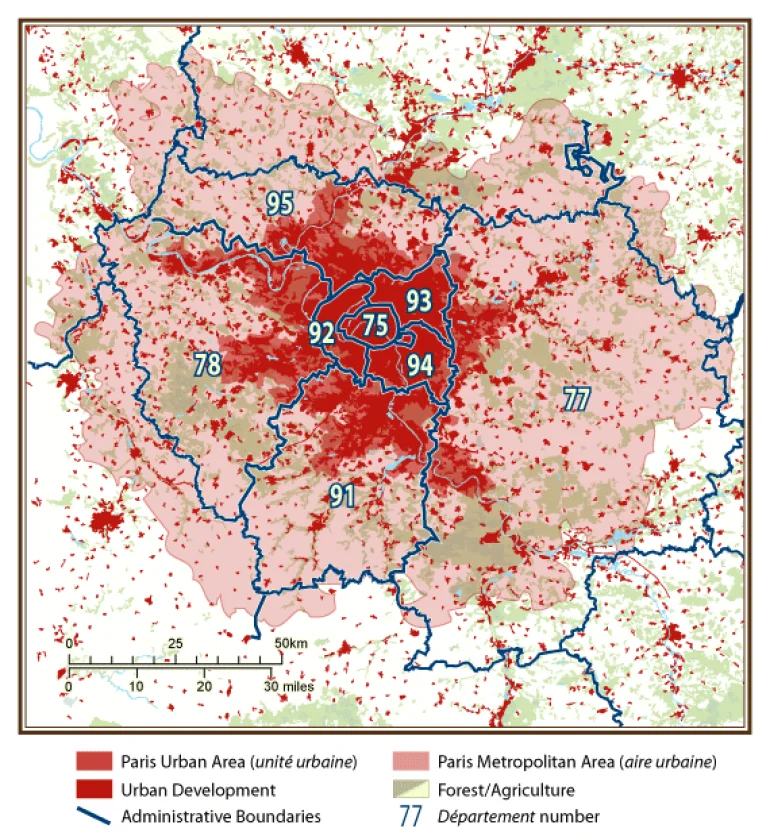
Everything described here refers mainly to central Paris (inside the Périphérique ring road), where most attractions are located, including areas like Neuilly-sur-Seine and La Défense.
Outside this area lies the suburbs (banlieue), with over 10 million inhabitants, where realities can be very different — but that is another story.
links and further reading...
You can download the official safety guide “Paris en toute sécurité”, published by the Paris Prefecture, available in Italian.
In case of emergency, each arrondissement has its own police station: parisinfo.com police stations. The emergency number is 112, and operators speak several languages, including Italian.
Additional resources:
paris.fr security measures
Paris safety tips
local info blog
prefecturedepolice.interieur.gouv
 Mi chiamo Massimiliano Mugnaini, ma qui